Blog
Beyond Fossil Fuels in Santa Marta: The Importance of Ambitious Action for Climate Governance
May 21, 2026
Together with Esteban Acevedo and Leandro Lanza, our country liaisons for Colombia and Brazil, I had the opportunity to represent the Plant Based Treaty at The Beyond Fossil Fuels conference in Santa Marta, Colombia. The conference convened governments, civil society organizations, activists, scientists, Indigenous representatives, academics, and policy advocates to tackle a just and safe transition away from fossil fuels in the face of escalating climate breakdown.
Co-hosted by the Colombian and Dutch governments, the conference comprised official negotiations and high-level political dialogues on April 28 and 29. Parallel spaces organized by civil society and grassroots movements provided opportunities for broader participation—including the People’s Summit coordinated by Climate Action Network International and the Fossil Fuel Non-Proliferation Treaty initiative.
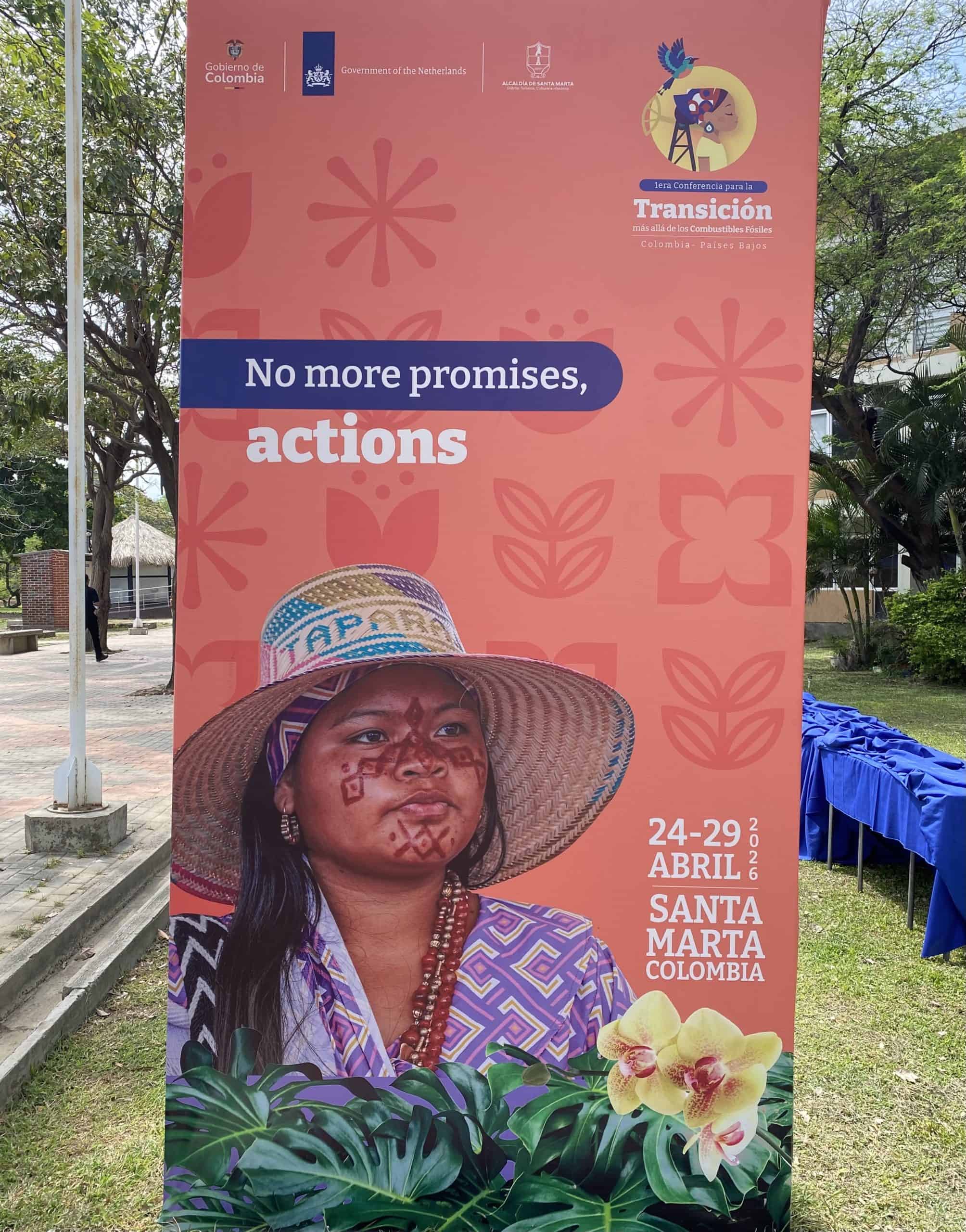
Why Food Systems Belong in Climate Negotiations
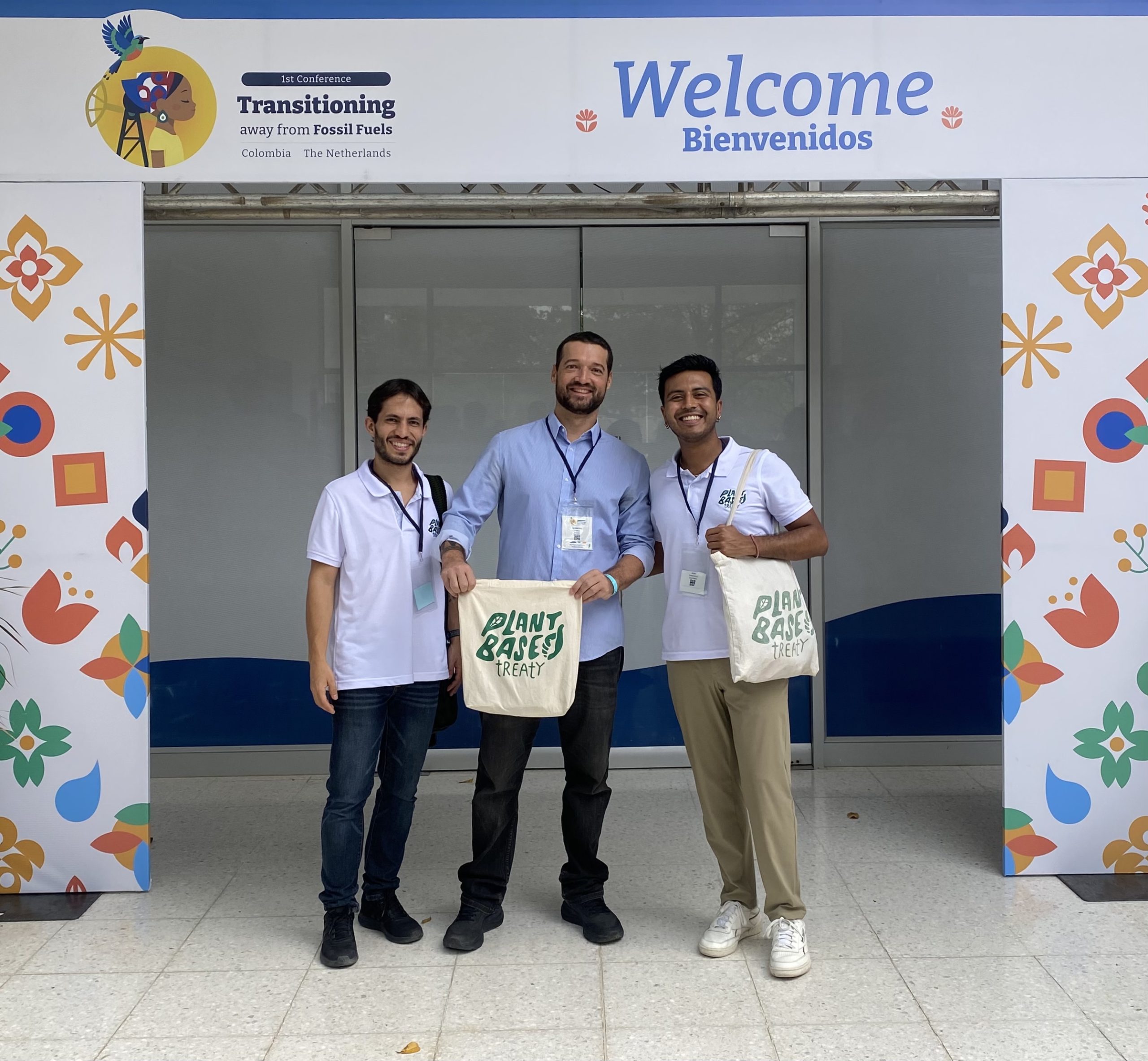
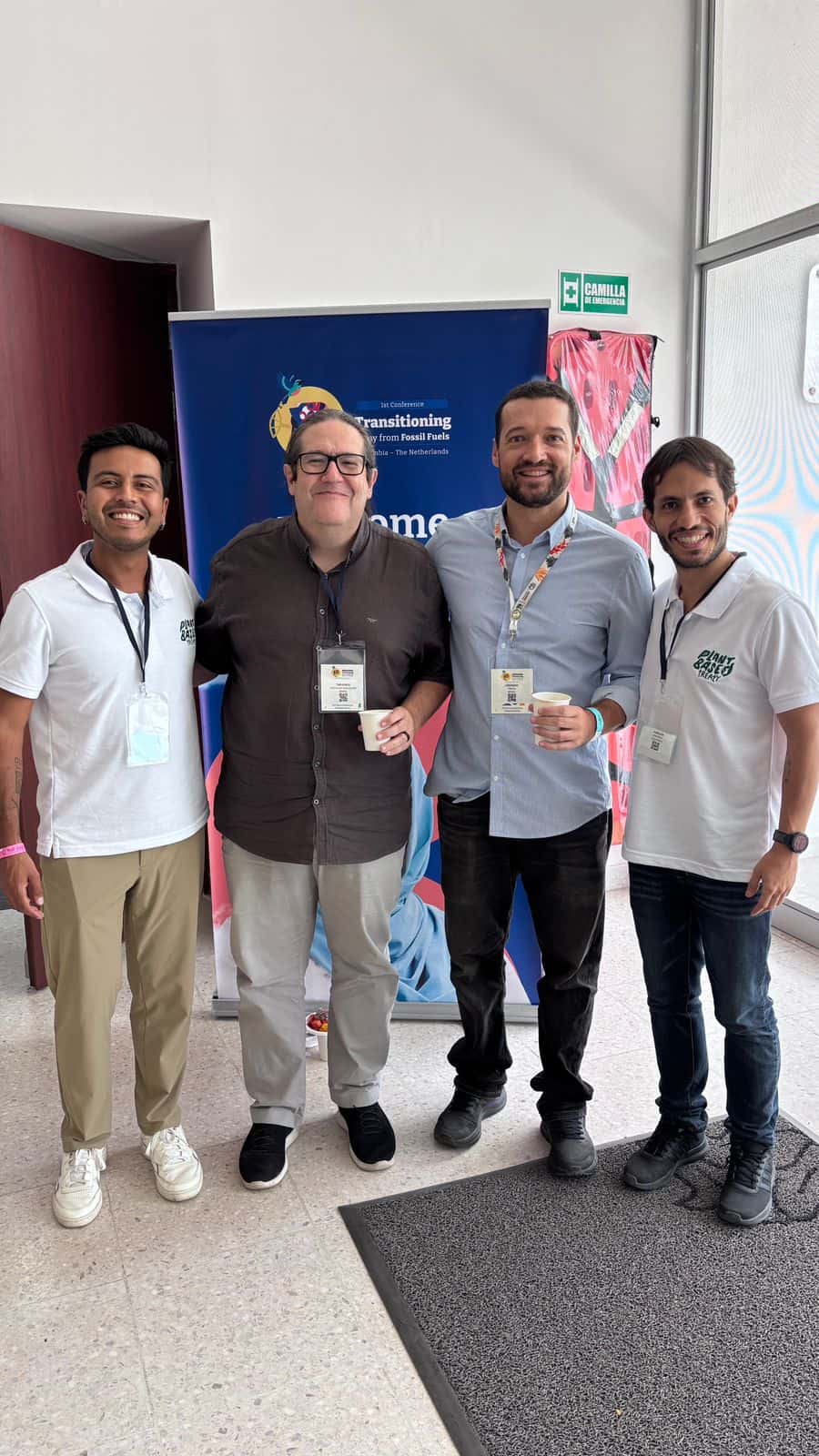
From left to right: Esteban Acevedo, Leandro Franz, and Juan Casadiego at the entrance of the parliamentary event in Santa Marta.
Plant Based Treaty is an international non-profit with a mission to promote a shift towards a just, plant-based food system with a vision of a global Plant Based Treaty attached to the Paris Agreement, and best practices in plant-based food policy implemented by cities and other institutions. The treaty has 40 core principles under 3 core pillars, relinquish, redirect and restore, as the necessary framework to address the food system’s role in the climate crisis. We were delighted for the opportunity to explore alignments and how food system change could complement a transition away from fossil fuels to combat the climate crisis.
A pivotal moment featured a high-level panel with Colombia’s Ministers of Environment and Agriculture. During the discussion, the Minister of Agriculture acknowledged that animal agriculture is a major driver of deforestation and ecosystem degradation, particularly in the Amazon rainforest. This high-level acknowledgment perfectly illustrates the urgent need for the PBT’s ‘Relinquish’ pillar, which demands a halt to land conversion for animal agriculture.
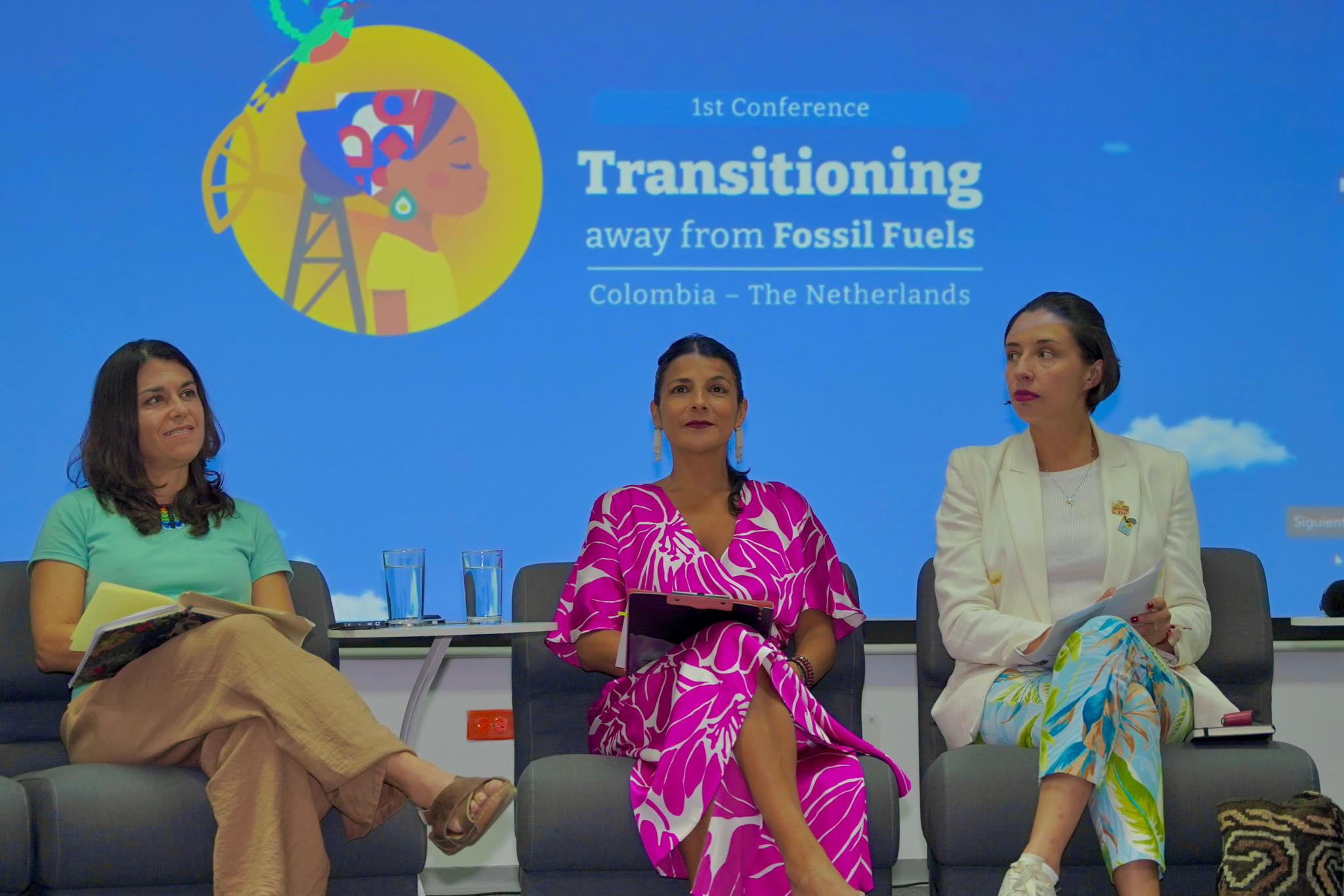
From left to right: Eloisa Berman, researcher at Universidad del Norte; Colombia’s Minister of Environment, Irene Vélez; and Colombia’s Minister of Agriculture, Martha Carvajalino. Source: Ministerio de Agricultura, Colombia.
Scientists Call for Urgent Systems Change
A new international scientific panel was launched to provide governments with evidence-based guidance and policy recommendations for moving beyond fossil fuels. Among the scientists involved was renowned Brazilian climatologist and Nobel Peace prize awarded Carlos Nobre, celebrated for his research on Amazon tipping points and contributions to the Intergovernmental Panel on Climate Change (IPCC). Nobre endorsed the Plant Based Treaty in 2025 and stated:
“The Amazon is the largest tropical forest and it is very close to a tipping point of becoming a degraded open-canopy ecosystem.The Plant Based Treaty is very relevant to develop a new social bioeconomy in the Amazon based on hundreds of products from its rich biodiversity to produce very healthy foods.”
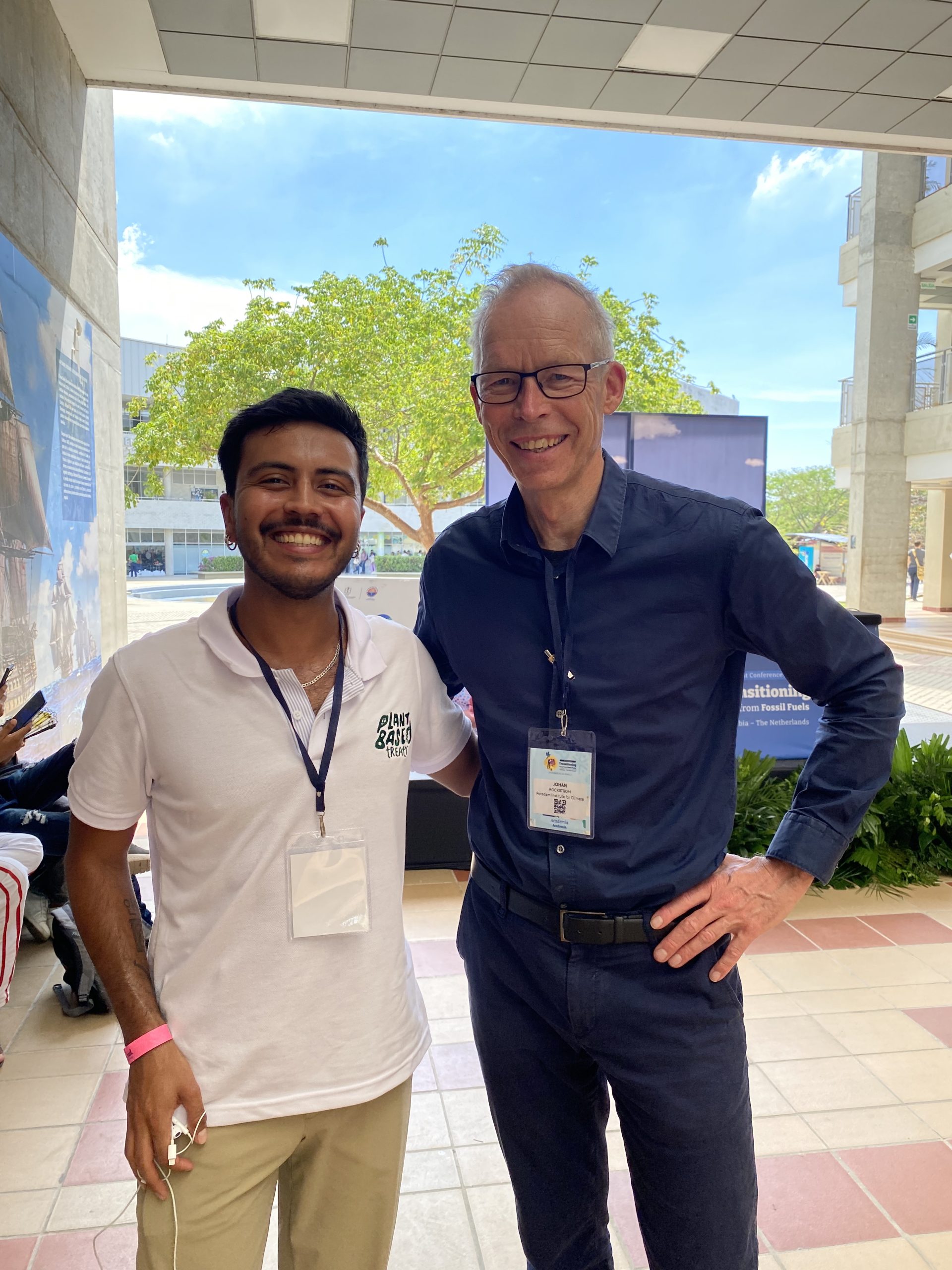
Juan Casadiego and Professor Johan Rockström after the interview for the Plant Based Treaty during the Pre-Scientific-Conference.
Our involvement in Santa Marta began at the Pre-Science Conference on April 24–25, where academics, scientists, and think tanks convened to discuss the urgency of climate action. In our discussions with renowned climate scientist Johan Rockström, we explored how the Plant Based Treaty can serve as the policy mechanism for the transition he advocates. Rockström, who stressed the importance of grounding climate action in the latest scientific data. Rockström also commented:
“The food system’s transition is the second most important transition to deviate away from climate risk. Thirty percent of greenhouse gas emissions come from food systems and we also know that if we would transition into more plant-based healthy diets, we could save up to 15 million premature deaths.”
We also spoke with Professor Martí Orta from the Universitat de Barcelona, a collaborator with the Plant Based Treaty on educational initiatives for food systems transition. He highlighted that:
“Keeping global warming below 1.5°C would require ending 96% of existing fossil fuel expansion plans, while keeping it below 2°C requires ending them by half. This tells us how rapidly the window for effective climate action is closing.”
Civil Society and Grassroots Voices
Beyond official negotiations, the People’s Summit served as a vital forum for civil society organizations and grassroots movements to exchange ideas and forge alliances for climate justice and systemic transformation. Key demands that surfaced included halting fossil fuel expansion, accelerating a just and equitable phase-out, strengthening mechanisms for international cooperation, and holding major polluters accountable for environmental and social harms.
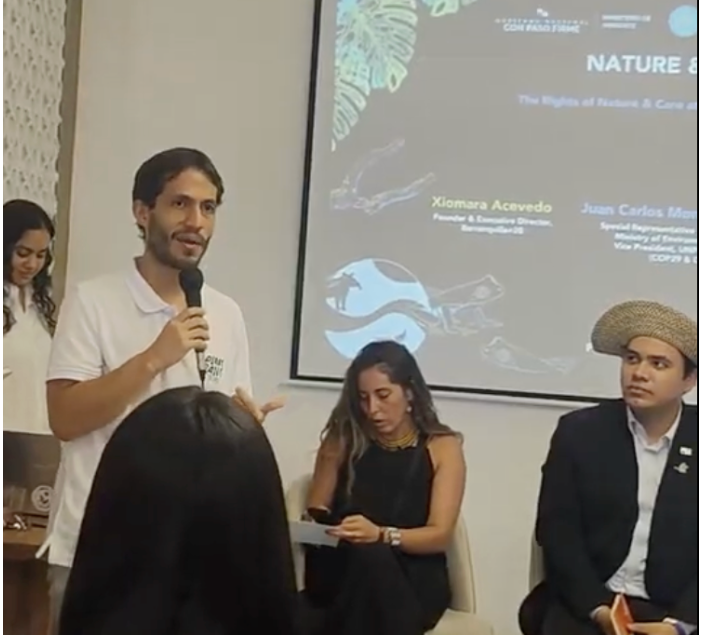
Esteban at a roundtable. On the right with the hat is the climate change representative from Panama, Juan Carlos Monterrey.
During one NGO roundtable, Esteban Acevedo reflected: “It’s important to place life at the center of fossil fuel phase-out strategies — not only human life, but safeguarding life in all its forms.”
Food systems gained more prominence than in many traditional climate discussions. Nassim Nobari, cofounder and director of Seed the Commons, emphasized that the People’s Summit Declaration successfully incorporated animal agriculture and cattle grazing as central issues in climate debates. Reflecting on this achievement, she noted:
“So much of the climate conversation either avoids animal agriculture topics or moves in the opposite direction.” She stressed the importance of distinguishing genuinely regenerative approaches from false narratives that frame cattle grazing as a climate solution. She also highlighted the need to address industrial animal agriculture within broader debates on subsidies, land use, and biodiversity conservation strategies.
Building Alliances for Ecological Transition
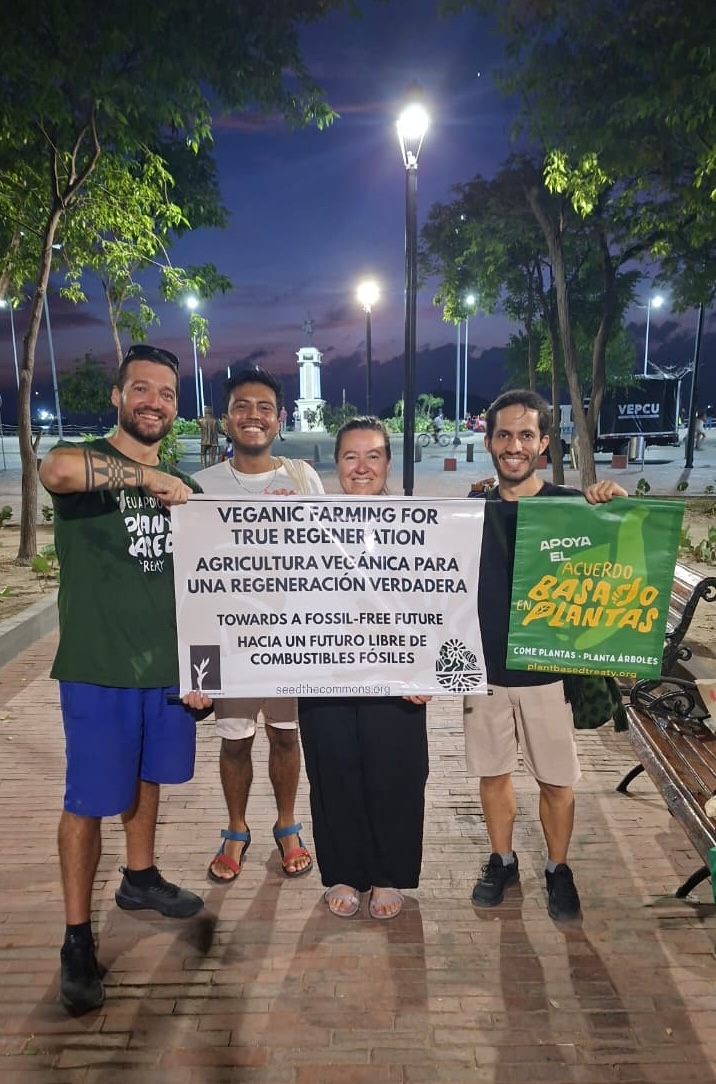
From left to right: Leandro, Juan, Nassim Nobari, Cofounder of Seed the Commons, and Esteban.
One of the conference’s most valuable outcomes was the growing recognition that transitions cannot be addressed in isolation. Discussions repeatedly highlighted the deep interconnections among energy systems, land use, biodiversity, public health, Indigenous rights, and food systems as depths of the ecological crisis.
We also spoke with Canadian Senator and academic Rosa Galvez, who advocated for linking discussions of the fossil fuel transition with wider food systems transformation. Similarly, Brazilian Deputy Tarcísio Motta endorsed the Plant Based Treaty after Leandro introduced him to our initiative, recognizing the importance of incorporating food systems into ecological transition debates. As he stated:
“Ecological transition does not exist without considering the impact of our food systems on planet Earth.”
A Growing Global Movement
Throughout the conference, the Fossil Fuel Non-Proliferation Treaty initiative played a prominent role in shaping discussions about emerging climate governance. Its significance for global climate action was highlighted by multiple countries—especially from the Pacific and Africa—that publicly endorsed the initiative, reflecting its growing visibility and legitimacy within international climate negotiations. The growing legitimacy of the Fossil Fuel Treaty provides a blueprint for our work at the Plant Based Treaty. Just as the world is uniting to phase out coal, oil, and gas, the PBT is building the exact same international coalition to negotiate a just transition away from animal agriculture.
We recorded and shared daily vlog-style videos that are posted on our social media, where we documented the experience, reflected on the key discussions taking place, and introduced many of the inspiring people and organizations we had the opportunity to meet.
At the Plant Based Treaty, we recognize that transformative governance initiatives rarely emerge fully institutionalized. Instead, they often begin as grassroots efforts that gradually reshape public discourse, forge coalitions, and expand the boundaries of political possibility. The history of global governance demonstrates that many international agreements—from landmine bans to tobacco regulation—were once deemed unrealistic before eventually achieving widespread institutional support.
From left to right: Juan, Tarcísio Motta, Brazilian academic and Federal Deputy, and Esteban at the parliamentarians event.
The discussions in Santa Marta underscored the importance of cooperation among governments, civil society, scientists, and grassroots movements to advance climate action. They also highlighted the growing consensus that achieving climate goals demands not just energy transitions, but also systemic changes in food systems, land-use governance, and patterns of production and consumption.
As international momentum builds to phase out fossil fuels, food systems can no longer remain on the margins of climate governance. Tackling the climate and biodiversity crises demands confronting the interconnected systems fueling environmental degradation, while supporting pathways to healthier, more just, and regenerative futures. The Plant Based Treaty remains committed to advancing the vital global transitions away from fossil fuels as well as the necessary shift toward sustainable food systems. The momentum in Santa Marta proves the world is ready for the Plant Based Treaty.

Juan Casadiego, PhD is a researcher focused on regenerative sustainability and an advocate for plant-based food system transitions. As a scientific advisor and city campaigner for the Plant Based Treaty in Spain, he promotes the adoption of science-based, climate-resilient food policies across governments and educational institutions.