Blog
Did You Know Octopus Have Three Hearts And Blue Blood? These Magnificent Marine Mollusks Are Being Exploited And Need Our Help
July 1, 2025
Inky the octopus from New Zealand escaped the tank where he was being held captive at an aquarium and traveled across the floor, squished into a 50-metre-long drainpipe, and slithered back into the sea where he belongs. Octopuses are sentient beings that want to live in freedom and deserve so much better than a life in captivity, whether it’s on display in a tank or stuck on a factory farm. Keep reading to learn how incredible these creatures are and why they need our help.
Octopuses Are Brilliant
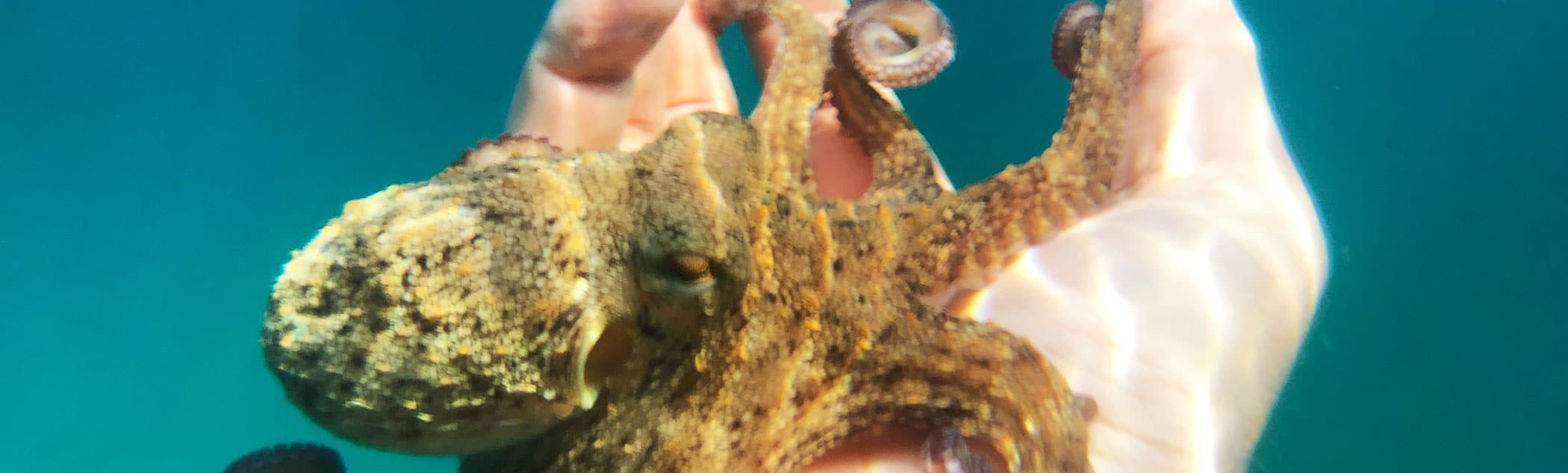
Octopuses are the world’s smartest invertebrates and even their eight arms have a mind of their own. Not only do they have a large brain that makes them unique and extremely intelligent, but their arms can function independently of each other. With two-thirds of their neurons in their arms, octopuses are excellent multitaskers and process sensory information exceptionally well while reacting quickly to situations. Neither fish nor mammal, these solitary creatures are classified as marine molluscs and members of the class Cephalopoda. Octopuses carry shells for protection from predators, use items they find as tools, and arrange stones outside their dens.
With three functioning hearts, two of them work to move blood to their gills, while heart number three pumps blood to the rest of their body. Not only can octopuses change colour and patterns due to their skin containing cells called chromatophores, but their blood is blue! This distinctive characteristic is due to the fact that their blood is copper-based rather than iron-based, like we have in our own haemoglobin. This copper-based protein helps octopuses transport oxygen molecules in the cold and low-oxygen conditions often found in the deep ocean, where they belong.
A tiny octopus swims up to a woman to gives her little handshakes — then waits for her every day to bring him gifts.
Octopuses Feel Pain
Jennifer Mather, PhD, a psychology professor at the University of Lethbridge in Alberta, Canada, and one of the world’s leading experts on octopus behavior, explains in a Vice interview.
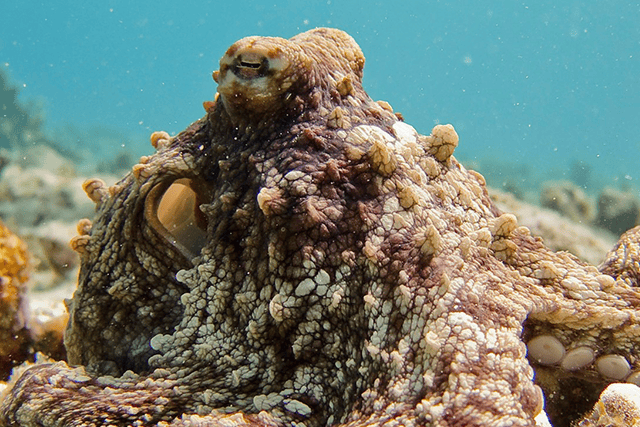
“It’s probable that the octopus’s reaction to pain is similar to a vertebrate. They can anticipate a painful, difficult, stressful situation — they can remember it. There is absolutely no doubt that they feel pain. The octopus has a nervous system which is much more distributed than ours. If you look at us, most of our neurons are in our brain, and for the octopus, three-fifths of its neurons are in its arms.”
Octopus Farming Destroys The Earth
Octopus farming is environmentally unsustainable. Animal agriculture is a major contributor to the climate crisis, and eating farmed octopuses poses serious risks to our ecosystems while also adding to the fishing crisis the world is facing as oceans become drained of fish and sea creatures from overfishing. Rather than building octopus farms, we must move towards a healthy and sustainable plant-based diet to live within our planetary boundaries.
Octopus Farming Must Be Stopped
BlogOctopus farming must be stoppedJune 6, 2023 Octopuses are extremely intelligent, much more complicated than what was previously believed, and should be protected at all costs. But a large Spanish...
In June 2023, I wrote that octopus farming must be stopped and Nueva Pescanova, a large Spanish fishing company that was on the verge of opening the world’s first octopus farm in Las Palmas de Gran Canaria in the Canary Islands, should halt its plans. Despite the backlash from animal rights and environmental activists warning how dangerous and inhumane the idea of farming octopus is, they are moving forward.
Fishing operations and aquaculture pollute oceans and waterways. As explained in The Case Against Octopus Farming; “Octopuses have a food conversion rate of at least 3:1, meaning that the weight of feed necessary to sustain them is about three times the weight of the animal. Given the depleted state of global fisheries and the challenges of providing adequate nutrition to a growing human population, increased farming of carnivorous species such as octopus will act counter to the goal of improving global food security.”
At the Pescanova Biomarine Center they are now developing new ways to farm octopus and greenwashing their work by using terms like studying “animal welfare.” Pescanova makes money by killing and selling sea creatures like prawns, shrimp, crabs, and fishes, with a fishing boat fleet of 54 vessels and a production area equivalent to 10,000 soccer fields. Raising octopuses in tanks on land when they belong in the sea is inhumane, cruel, and unsustainable.
How Can You Help Octopuses?
In addition to not eating octopuses and choosing vegan options, you can sign the petition launched by Animal Save Movement and Plant Based Treaty that has so far garnered over 142,000 signatures.
Plant Based Treaty’s talented animator, Atami Tsoi, depicts the frightening reality of the millions of octopuses destined to suffer by Pescanova.
“Did you know that octopuses have 3 hearts? In the animation, the octopus gives 3 heart-shaped stones as a gift to the girl who rescued her, which symbolizes the solution to the climate crisis – each heart corresponds to the 3 Rs of the Plant Based Treaty: Redirect, Relinquish and Restore.“ – Atami Tsoi
The moving script was written by Hoshimi along with Global Campaign Coordinator Anita Krajnc and Communications Director Nicola Harris. The epilogue is a reference to Leo Tolstoy’s short story Esarhaddon, King of Assyria — a reminder that it is impossible to harm others without harming ourselves.
Please consider donating to Plant Based Treaty so that we can put power into Plant Based Treaty teams worldwide. One generous donor has offered to match your donations until the end of 2025. With your support, we can help protect octopuses in 2025.

Miriam Porter is an award-winning writer who writes about veganism, social justice issues, and eco-travel. Miriam currently lives in Toronto with her son Noah and many rescued furry friends. She is a passionate animal rights activist and speaks up for those whose voices cannot be heard.
More from the blog
Beyond Fossil Fuels in Santa Marta: The Importance of Ambitious Action for Climate Governance
By Miriam Porter

Fighting Hypertension With The Power of Plants
By Miriam Porter
Obesity Is An Epidemic: Join Our 30 Day Green Smoothie Challenge
By Miriam Porter