Blog
Grow Your Own Kale And Spinach For Healthy Green Smoothies
May 21, 2025
If you joined Plant Based Treaty’s green smoothie challenge for Earth Month, chances are you used large amounts of spinach, kale, and other power greens to create your nourishing and healthy masterpieces. In addition to enjoying vibrant green smoothies, the month-long challenge is an opportunity to learn about healthy recipes, mental health benefits of smoothies, planetary health benefits, and advocacy.
Keep reading to learn how you can grow your own fresh kale or spinach, balcony herbs, the Kratky method, and Plant Based Treaty’s successful seed ball workshop.
Kale
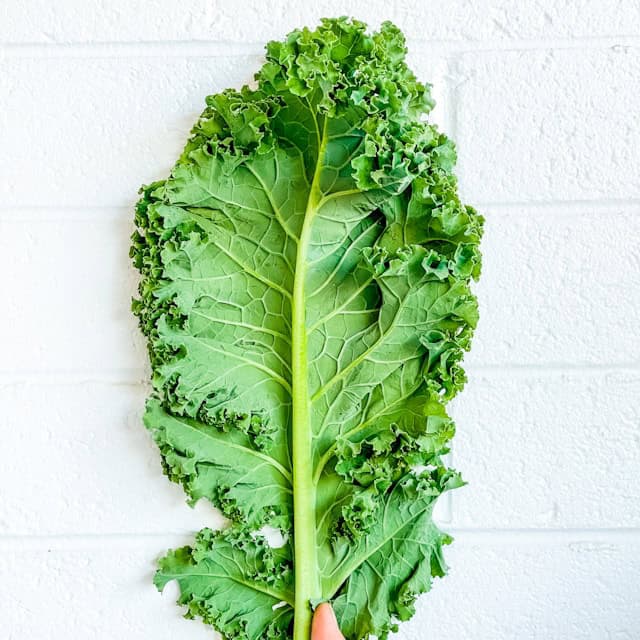
According to The Old Farmer’s Almanac, kale grows best in the spring and fall and is one of the most nutritious vegetables. This hardy crop is easy to grow and produces leaves in the first year and in the following year forms a flower stalk. They explain that you can start plants from the nursery or plant seeds directly into the soil and add fertilizer. Help the earth and use an inch of organic compost to help omit food waste.
Interesting Fact: Kale is one of the best sources of calcium. In fact, one cup of cooked kale has 177 mg of calcium – that’s more calcium per serving than cow’s milk. So skip the cruelty and choose plants!
Spinach
This powerful leafy green vegetable is rich in nutrients and antioxidants and can be enjoyed raw or cooked. It’s high in insoluble fiber, low in carbs and calories, and an excellent source of calcium, iron, folic acid, vitamin C, vitamin A, and vitamin K1. This fast-growing veggie needs six weeks of cool weather and if planting seeds in early spring, The Old Farmer’s Almanac recommends sowing seeds when the ground warms to 40°F. They suggest planting seeds in rows 12 to 18 inches apart, cover them with ½ inch of soil, and water regularly.
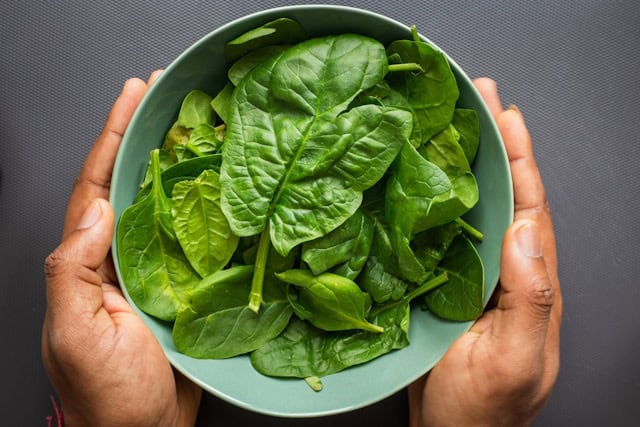
Varieties of spinach they suggest growing for spring and fall plantings include baby-leaf, savoy spinach, semi-savoy, and smooth or flat-leaf. To get the most out of your spinach in smoothies, use the larger leaf varieties to bulk them up and save the baby leaves for a salad, such as this Sweet Spinach and Berry Salad by Forks Over Knives.
Fun Fact: Spinach originated in ancient Persia and is related to beets, chard, and quinoa and is part of the amaranth family. The largest producer of spinach is China.
Herbs
If you don’t have access to a backyard garden, there are several herbs you can grow on your balcony or even indoors. Place herbs on your balcony or windowsill that gets the most sun and water frequently to avoid them drying out. Here are three easy to grow green herbs to get you started.
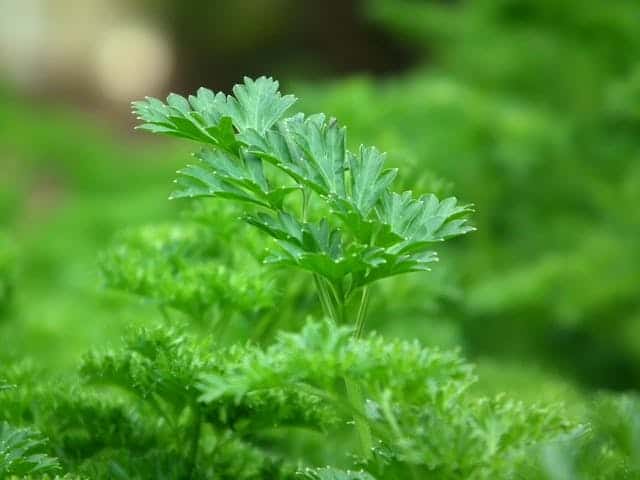
Parsley: Parsley is delicious as a garnish, can be added to salads, put on a sandwich or inside a wrap, and perfect for green smoothies. It contains vitamin A, C, and K and has high nutritional value with many powerful health benefits.
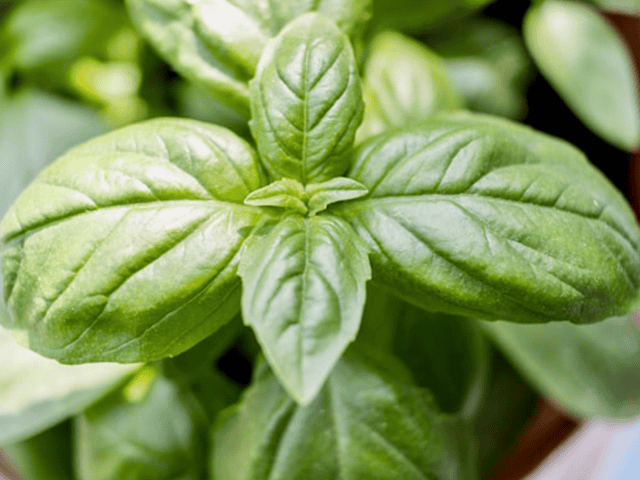
Basil: Basil thrives in moist soil so be careful not to let it dry out, especially since pots typically dry out quicker than growing in the ground. Basil needs about six to eight hours of sun and you can start harvesting the leaves as soon as it’s large enough to spare a few. It’s a delicious added touch to pesto recipes, sauces, wraps, salads, and is often used in Italian and Thai cuisine.
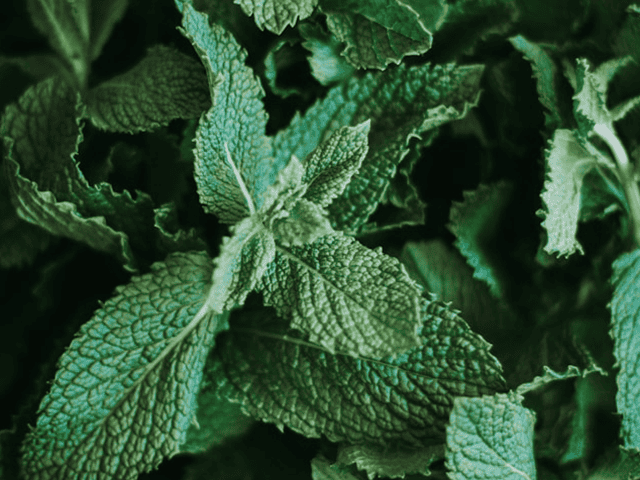
Mint: Every year I grow mint on my balcony and use the fresh leaves for tea. It’s an easy herb to grow, can thrive in many conditions, and if you plant mint in bigger pots it tends to keep growing larger and multiply. Mint has been known to help relieve indigestion, is a source of antioxidants, Vitamin A, and iron.
Kratky Method:
Hinojosa explains, “First, select a clear mason jar and add a net pot filled with clay pebbles to hold low-light tolerant herb seeds or seedlings like basil, thyme, mint, or parsley. Fill the jar with plain water or a nutrient-rich hydroponic solution and suspend the net pot partially in the water and place the mason jar near a window with indirect sunlight or under a grow light. This allows the herbs’ roots to develop naturally in the plain water or nutrient and water solution.”
Hinojosa says you can also use this method to grow cilantro, sage, dill, arugula, lettuce and even spinach for smoothies.
Seed balls:
In March, Plant Based Treaty hosted a seed ball workshop at Mississauga’s Seed Library launch, organized by campaigner Yarim Angelique and led by marketing director Adrienne George. The event was so busy with double the number of people showing up to participate that she ran it twice! George showed the avid gardeners in attendance how to create their own seed balls using the recipe below.
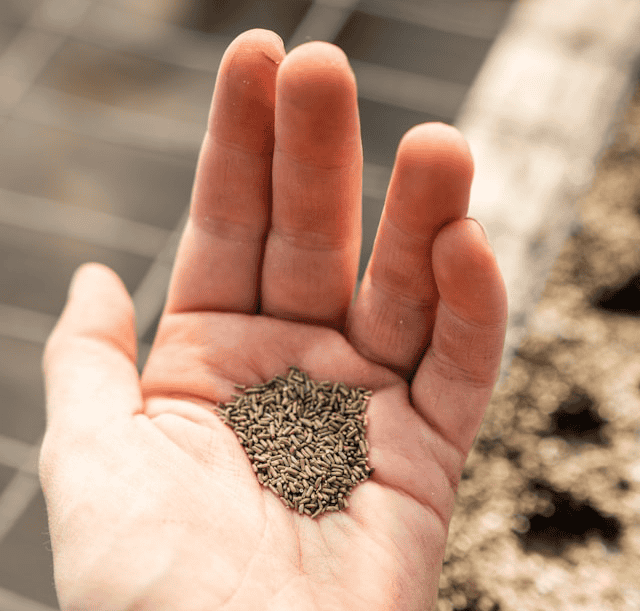
Seed ball recipe:
- 5 cups of soil
- 3 cups of red clay powder
- 3/4 – 1 cup of pollinator seeds
- Add water to make them moist enough to form balls (about 1.5″ in diameter) and then place in the sun for the day to dry.
- Once dried, they’re ready to go!
During the successful event, Anita Krajnc, Plant Based Treaty’s campaign coordinator, gave attendees packs of seeds and shared information about how to make Dr. Goldner’s nourishing green smoothie and sign up for the smoothie challenge.
To help support future Plant Based Treaty workshops, help implement plant-based solutions across the globe, and halt the expansion of animal agriculture, please consider donating today. One generous donor has offered to match your donations, meaning for every $1 you donate, we receive $2.

Miriam Porter is an award-winning writer who writes about veganism, social justice issues, and eco-travel. Miriam currently lives in Toronto with her son Noah and many rescued furry friends. She is a passionate animal rights activist and speaks up for those whose voices cannot be heard.
More from the blog

Beyond Fossil Fuels in Santa Marta: The Importance of Ambitious Action for Climate Governance
By Miriam Porter

Fighting Hypertension With The Power of Plants
By Miriam Porter

Obesity Is An Epidemic: Join Our 30 Day Green Smoothie Challenge
By Miriam Porter